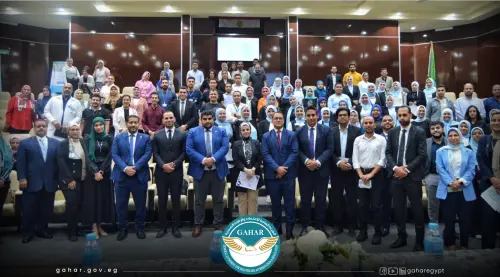
As part of the events organized by the General Authority for Healthcare Accreditation and Regulation (GAHAR) in celebration of World Patient Safety Day in the provinces of comprehensive health insurance, Dr. Ahmed Taha stated that the Authority plays a fundamental role in empowering patients to access healthcare services through the issuance and application of national standards guidelines, noting that 40% of GAHAR standards related to the accreditation of healthcare facilities pertain to patient safety and security, their involvement in their treatment plans, and the respect for their privacy.
The branch of the General Authority for Healthcare Accreditation and Regulation in Ismailia participated in an awareness seminar on patient safety at the Ismailia Medical Complex, where Dr. Youssef Amer, Director General of the branch, confirmed that the national quality standards issued by GAHAR and accredited by the International Society for Quality in Health Care (ISQua) contribute to improving patient safety and reducing medical errors, by enhancing the quality of medical services provided by healthcare providers, which reflects on the safety of both the healthcare provider and the patient.
In Port Said, a joint seminar was held among the entities of the comprehensive insurance system, in which the team from the branch of the General Authority for Healthcare Accreditation and Regulation participated, showcasing the various applications of GAHAR standards in accredited hospitals affiliated with the Healthcare Authority and the impact of this on the quality of healthcare services provided to beneficiaries of comprehensive insurance.
The branch of the General Authority for Healthcare Accreditation and Regulation in Luxor also organized an event at Isis Specialized Hospital, where GAHAR standards centered around the patient were reviewed, targeting the safety of the patient and their family and ensuring their full rights in healthcare, emphasizing that patients have the right to know their medical diagnosis and the treatment protocol provided to them, as well as to choose the appropriate healthcare provider. The visit also included the emergency department and outpatient clinics to meet with patients and discuss their role in participating in the healthcare services provided to them for their safety.